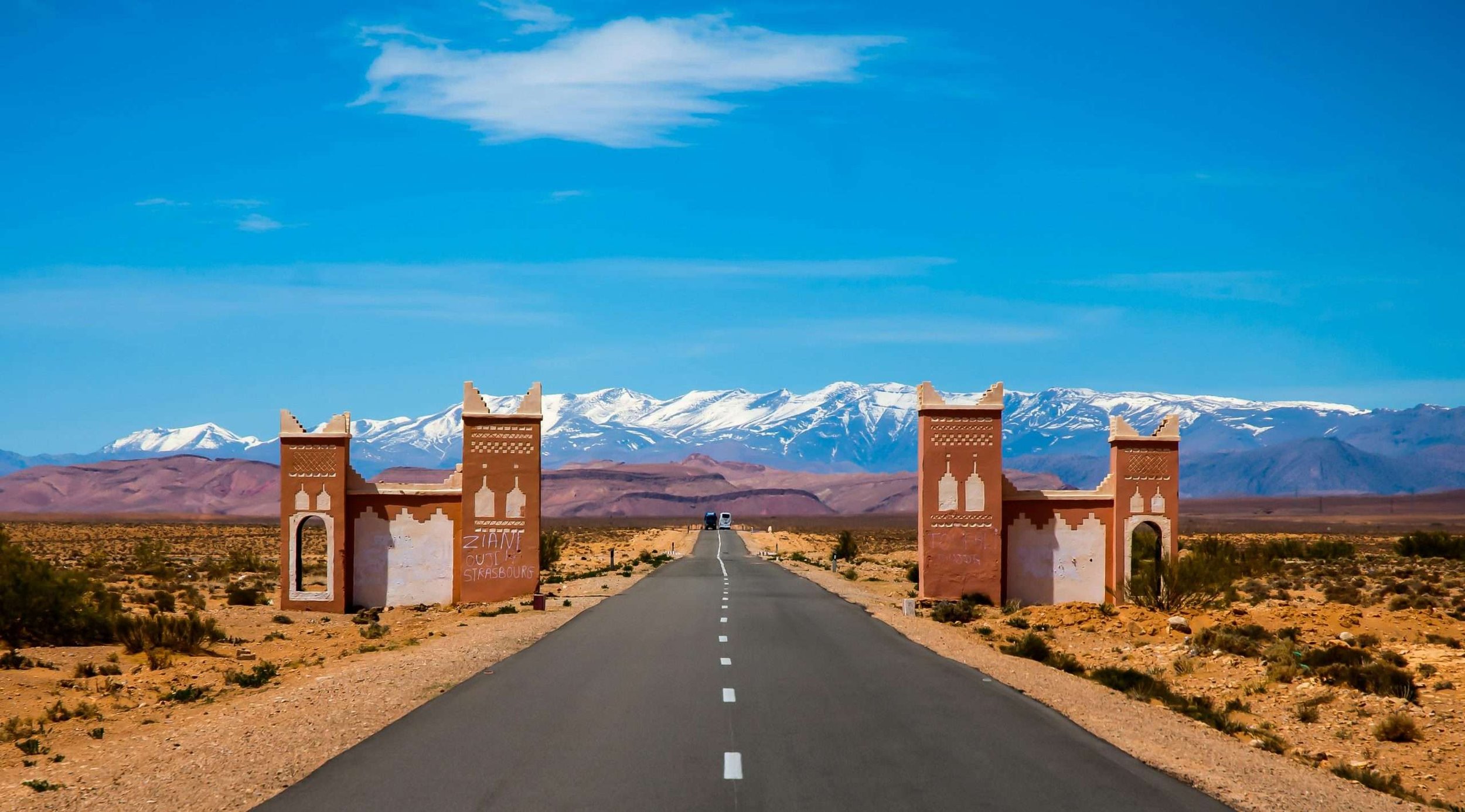
For many people planning a Morocco trip, the question is not simply whether Morocco is safe. It is whether the journey will feel comfortable, manageable, and well supported once they arrive.
That distinction matters.
Most travelers are not really asking whether Morocco is dangerous in the abstract. They are asking something much more practical. Will I feel comfortable walking through the medina? Will I be overwhelmed? Is it easy to get around? What about scams, taxis, or long road transfers? Is it a good destination for women, couples, or first-time visitors?
The most useful answer is a calm one: Morocco is a well-established and widely visited destination, but like many popular travel destinations, it rewards awareness, sensible precautions, and thoughtful route planning.
Travelers should also review the latest official travel advice before departure, as recommendations can change over time.
In reality, a Morocco trip often feels safest when it is well designed. Good arrivals, trusted transport, realistic pacing, and knowing how the route flows can remove a surprising amount of friction.
In this guide, we’ll look at what travelers are usually really asking when they ask about safety in Morocco, what to know in practice, and how to shape a trip that feels confident rather than anxious.
The short answer
Yes, Morocco can absolutely be a safe and very rewarding destination for travelers, provided it is approached with the same blend of awareness and common sense you would bring to any popular country.
That does not mean every traveler has the same experience. It means the overall question is too broad to be useful on its own.
A better question is this:
What makes a Morocco trip feel safe, smooth, and comfortable in real life?
In most cases, the answer is not only about crime or security. It is also about:
- how you arrive
- how you move between places
- whether your route is realistic
- how much you are improvising
- whether the trip matches your confidence and travel style
A lot of what people interpret as safety is actually a combination of comfort, clarity, and good planning.
What travelers are usually really asking
When someone asks whether Morocco is safe, they are often asking several different questions at once.
They may be asking:
- Will I feel comfortable in the cities?
- Will I get hassled in tourist areas?
- Is it easy to get around?
- Is it safe for women?
- What about scams or petty theft?
- What happens if I am doing a multi-stop route?
- Will the trip feel chaotic, or will it feel smooth?
These are sensible questions, and they matter far more than broad dramatic narratives.
For many travelers, Morocco feels least comfortable when too much is left unclear. Unplanned arrivals, confusing transfers, unclear taxi situations, over-ambitious route design, and the feeling of being dropped into each next step without enough support can all increase stress very quickly.
By contrast, when the journey is well paced and the logistics are handled properly, Morocco often feels far easier than travelers feared beforehand.
That is why the quality of the planning matters so much. Safety is not only about risk avoidance. It is also about reducing unnecessary uncertainty.
What to know in Morocco’s cities
Morocco’s cities are often the part of the trip that travelers are most unsure about before arriving.
That is understandable. Medinas can feel dense, streets can feel busy, and the first sensory impression can be stronger than in more predictable European city travel.
That does not mean city travel in Morocco should feel intimidating. It means it is worth arriving with the right expectations.
What tends to feel easiest
Cities often feel easier when:
- you know how you are getting from the airport to your stay
- your accommodation is well chosen and well located
- you are not arriving exhausted into total uncertainty
- you have a realistic sense of the pace and density of the medina
- you are not forcing too much into one day
A city like Marrakech, for example, can feel vibrant and exciting when you have a good base and clear structure around the trip. The same city can feel harder if you are trying to navigate every detail while already tired, overstimulated, or unclear on the next step.
What to be aware of
In busy tourist areas, the most common issues are usually nuisance-level rather than dramatic: petty theft, overcharging, persistent sales tactics, and situations that feel more uncomfortable than unsafe.
A good general rule is to stay calm, stay aware, and avoid projecting uncertainty when moving through busy areas. If you look rushed, disoriented, or overly reactive, you are more likely to attract the kind of attention that makes a place feel harder than it needs to.
Confidence does not mean carelessness. It means moving through the city with a clear enough plan that you are not constantly improvising under pressure.
What to know about scams and petty crime
This is the part of the conversation that most travelers need framed properly.
Morocco is not unique in having petty crime or tourist-targeted nuisance behavior. The point is not to dramatize it, but not to dismiss it either.
In practice, the most common issues are:
- petty theft in busy areas
- opportunistic overcharging
- unwanted guiding
- taxi friction or unclear pricing
- moments where confusion is used to create pressure
These issues are usually best managed with preparation rather than fear.
Practical ways to reduce friction
- Keep valuables discreet and avoid carrying more cash than you need.
- Be especially aware in dense tourist areas and historical quarters.
- Do not let yourself get pulled into rushed decisions.
- Use trusted transport where possible.
- Know where you are going before setting off.
- Avoid wandering into very quiet or isolated areas late at night without reason.
Most of this is ordinary travel common sense. The value of saying it clearly is that it helps travelers separate manageable nuisance issues from exaggerated fears.
Is Morocco safe for women travelers?
For many women, this is one of the most important questions, and it deserves a clear, composed answer.
Yes, many women travel to Morocco and have excellent experiences. But it is also true that the trip can feel different depending on the traveler, the route, the level of confidence, whether the journey is solo or shared, and how much support exists around the logistics.
For women travelers, the question is often less “Is Morocco safe?” and more “Will I feel comfortable?”
That comfort is shaped by things like:
- how you move between places
- whether arrivals and departures are handled smoothly
- whether you are constantly navigating uncertainty alone
- whether the route is realistic
- how much street-level interaction you want in the trip
It is also worth thinking about cultural ease, not only physical safety. In Morocco, many women find that dressing with local norms in mind helps them feel more comfortable and attracts less unwanted attention. That does not mean there is one rigid rule, and international visitors are of course common, especially in places like Marrakech. But in many settings, a more modest approach to dress — for example covering shoulders, avoiding very revealing clothing, and choosing hemlines with a bit more length — often feels both respectful and practically easier.
For some women, solo Morocco travel feels exciting, energising, and completely manageable. For others, it feels more enjoyable as a privately supported journey or as part of a couple’s trip, especially on a first visit.
Neither approach is more correct. The important thing is fit.
A route designed for a confident solo traveler may not be the same route that feels best for someone seeking softness, ease, and minimal friction. Morocco works best when the style of the trip reflects the person taking it.
What to know on the road and between destinations
This is one of the most overlooked parts of the safety conversation.
Many travelers focus almost entirely on the cities, but some of the biggest differences in how a Morocco trip feels come from what happens between destinations.
A multi-stop itinerary can feel smooth, scenic, and well held when transport is clear and the route makes sense. The same trip can feel tiring or stressful when road days are too long, timings are unclear, or too many transitions are stacked together.
Why route planning matters
A route that looks exciting on paper can feel very different in real life. Long transfers, early departures, and too many hotel changes can create fatigue, and fatigue changes how secure and comfortable people feel.
This is one reason thoughtfully designed private journeys often feel safer and calmer. They reduce the number of decisions travelers have to make while tired, disoriented, or pressed for time.
What helps road travel feel easier
- realistic transfer days
- fewer unnecessary hotel changes
- trusted drivers and clear pickup arrangements
- enough time around major anchors like the desert
- a route designed for flow, not just for coverage
A good Morocco journey is not only about where you go. It is about how well the road between those places has been thought through.
Is Morocco safe for first-time visitors?
Yes, and in many ways Morocco can be a very rewarding first-time destination, provided the trip is designed intelligently.
The key for first-time visitors is usually not trying to prove too much. Many of the hardest Morocco experiences come from itineraries that are simply too ambitious for a first visit. Too many stops, too much movement, too much improvisation, and not enough room for the traveler to find their footing.
First-time visitors often do best with:
- a clear route
- a strong base or two
- thoughtful transitions
- one or two meaningful contrasts rather than every possible landmark
- enough support that the journey feels structured, not chaotic
The same principle often applies to family travel, where pacing and logistics become even more important.
The issue is rarely that Morocco is too much in itself. The issue is more often that the trip has not been edited well enough.
What helps a Morocco trip feel smoother
This is where the real answer lives.
For most travelers, a smooth Morocco trip comes down to practical design more than abstract reassurance.
The following usually make the biggest difference:
1. A well-handled arrival
After a flight, nothing changes the feel of a trip faster than whether the arrival is smooth or confusing. Knowing who is meeting you, where you are going, and how you are getting there immediately lowers the stress level.
2. Trusted transport
This is especially important on multi-stop journeys. Knowing that the transfers are handled cleanly and consistently removes a huge amount of friction.
3. A realistic route
Too many stops create fatigue. Fatigue makes everything feel harder. A realistic route does not only improve the quality of the trip; it improves the traveler’s overall sense of comfort.
4. Well-chosen stays
The right property in the right place can make a city feel easier, calmer, and far more enjoyable. The wrong property can do the opposite.
5. Clarity
A great deal of perceived insecurity comes from not knowing what is happening next. Good travel design replaces vagueness with quiet clarity.
This is why travelers often feel far more relaxed in Morocco when the trip is curated properly. It is not because Morocco needs to be over-managed. It is because thoughtful structure removes avoidable stress.
Should you travel independently or as a private journey?
Both can work. The right choice depends on the route, the traveler, and the kind of experience you want.
Independent travel may suit people doing a shorter city-based stay, or travelers who are very comfortable making decisions on the ground and adjusting constantly.
A private journey often makes the most difference when:
- the route is multi-stop
- the traveler wants to minimize uncertainty
- comfort matters as much as sightseeing
- time is limited
- the traveler wants the trip to feel smooth rather than improvised
This does not mean independent travel in Morocco is impossible or unwise. It means that private structure can significantly improve how the trip feels, especially for first-timers, couples, or travelers who want a more elegant experience from beginning to end.
Morocco is best approached with confidence, not anxiety
Morocco does not reward panic, but it does reward preparation.
Like many destinations, it works best when you understand what kind of place it is, what kind of route you are taking, and how much support you want around the journey.
For most travelers, the goal is not to eliminate every uncertainty. It is to remove the unnecessary ones.
That is what makes a Morocco trip feel secure, calm, and enjoyable.
Not fear.
Not overconfidence.
Just good judgment, good pacing, and a route that has been shaped properly from the beginning.
A well-designed trip will not only look good on paper. It will feel better on the ground. And in a destination like Morocco, that difference matters.
Considering a Morocco journey?
Every traveler is different. Some prefer complete independence, while others value the comfort of a thoughtfully supported private journey.
If you’re considering Morocco and would like guidance on pacing, routing, accommodations, or how to make the trip feel seamless from start to finish, we’d be delighted to help.
FAQ: Is Morocco Safe for Travelers?
Yes, for most tourists Morocco can be a safe and rewarding destination when approached with normal travel awareness. The most common issues tend to be petty crime, tourist-area nuisance behavior, and the need for sensible precautions rather than dramatic safety concerns.
Many solo women travel to Morocco and have very positive experiences. The trip often feels best when the route is realistic, arrivals and transfers are clear, and the traveler chooses the style of journey that matches her own confidence and comfort level.
Marrakech is one of Morocco’s most visited destinations and can be very enjoyable for tourists. As with any busy city, it is wise to stay aware in crowded areas, watch valuables, and avoid unnecessary uncertainty around arrivals, taxis, or late-night wandering in unfamiliar areas.
That depends on where you are and how you are moving through the destination. Busy central areas can feel very different from quiet or isolated streets. As a general rule, it is better to avoid wandering into unfamiliar, quiet areas late at night without a clear reason.
For most travelers, the most common issues are petty theft, overcharging, nuisance scams, and the discomfort that comes from unclear logistics. Much of this can be reduced through good planning, route clarity, and sensible awareness.
Yes, especially when the trip is designed with a realistic route and good logistical support. First-time visitors often have the best experience when they avoid over-ambitious itineraries and build in enough structure for the trip to feel smooth.
Both can work, but a private driver or curated private journey can make a significant difference for multi-stop routes, first-time visits, and travelers who want the trip to feel calmer and more seamless from start to finish.
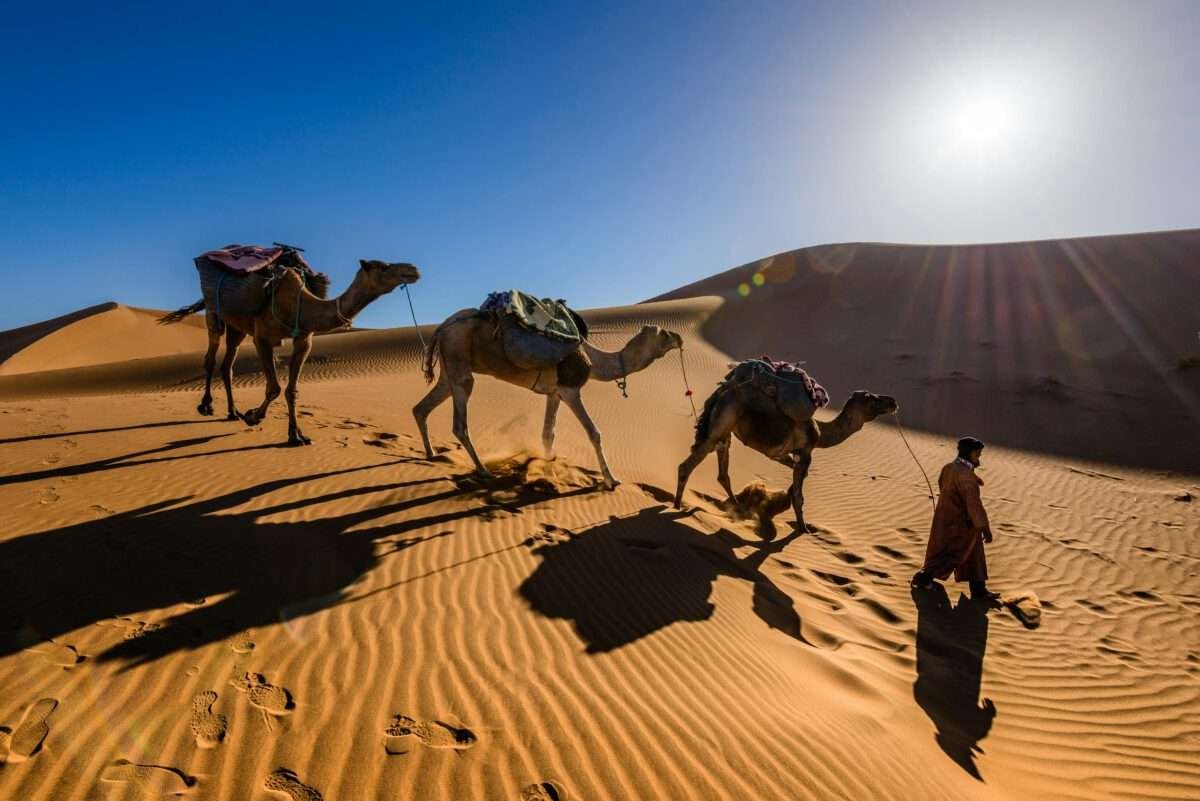
Yes, for most travelers the Sahara can be a very safe and memorable part of the trip when it is built into a well-planned route with proper transport and realistic pacing. The desert usually works best as a thoughtfully integrated part of the journey rather than a rushed extra.
The biggest difference usually comes from a well-handled arrival, trusted transport, realistic pacing, well-chosen stays, and knowing how the route flows from one destination to the next.
For most travelers, no. A more useful approach is to take the normal precautions you would take in any popular destination and to plan the trip well enough that it feels supported rather than improvised.
It can be, especially for travelers who are comfortable with a bit of sensory intensity and who plan the route clearly. For others, Morocco may feel better as a first solo trip with more logistical support built in.
Usually not one dramatic issue, but a build-up of smaller frictions: unclear transfers, too much improvisation, too many stops, fatigue, and a route that has not been matched properly to the traveler.